In the Frame

“Do you see the window?”

The Bohemian asks me, without pointing. We are in our living room, looking out the window to the front yard, but I know he doesn’t mean the glass in front of us.

I do know what he’s looking at, because I’ve seen it too.

“Yes. Let’s go down and look through it,” I say.

We take cameras because the flowers are bursting fuchsia, and it’s coming on sunset. The naturally formed circle we’ve been eyeing from afar, looks like a giant brush stroke from an invisible force. It winks with a flourish. Beckons us closer. Asks to be seen.

So often, we scan the yard with scrutinizing eyes, sizing up the next project. The irrigation needs to be extended. The Be-Still bushes need pruning. The garden, it can always use weeding.

But this evening, the Bohemian is in rare form, donning a bathroom. It’s Saturday and the sun is settling down. We step through the lawn and look in new ways. We breathe in fresh layers of leaves. Listen to birds on branches. Peer through that shining ring of flowers, magnifying sky, showcasing clouds.

We’ll try to capture the window, but cannot. The colors too elusive, the lighting, for our eyes only. This is a peek for the moment, not for later.

I enjoy the strata of seeing. My small Cannon window lens, focused upon the Bohemian’s handheld window, which is set upon the circle of flowers framing sky. Multiple filters, these bands through which we behold.


2016-02-02_bougainvillea window


And then, it’s time to set down the apparatuses. Stop trying to capture. We simply gaze and wander. See and be.

The Year of My Favorite Light

it was the year of my favorite light
when I inherited
my grandmother’s dishes
stacked my barren shelves
with her exotic antiques
filled my fridge
with garden veggies from my friends
no money
for much more

it was the season of lilikoi
and he would gladly offer
the peach-fuzzed
nectar-filled
passion fruit
spilling from the pockets
of his pack

it was the time we pieced it together
finding coconuts
but not having a machete
trying
the delicate art of breaking
cracking with a hammer
reaping all rewards

in that one bedroom
upstairs
we may have been surrounded
by ratting, dandered cats
pussyfooting
past our windows
I just basked in light

streams of sun
filtering
exquisite
in the kitchen
cracked concrete counters
family heirlooms
and fresh harvest


mango plate

Change in the Road

courtesy of Jeb
courtesy of Jeb


We were walking the same path I used to tread over thirty years ago. I was still beside my sister, though now, we were also with her children. My husband and my twelve year-old son wandered up ahead.

When we were kids, just nine and seven, we’d follow this gravel driveway to the creek. Cross the empty country road, which hardly ever saw a car, and carefully skirt through a barbed wire fence to reach the banks of the low-level water. In the summer, green algae baked on sun-bleached rocks, and tadpoles wiggled in scarce pools within the shadows. We’d spend hours in the quiet, skipping stones and splashing in the rushes.

Today, much remains the same here, though I am decades older, and visiting this landscape with a new generation of family.

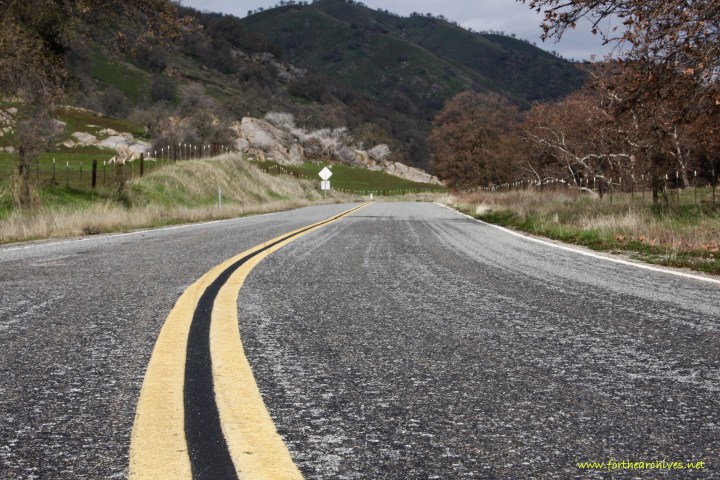
One change has been the road. What was once just an asphalt thread, way off the beaten path, has now become a thoroughfare to escape the city. Sports utility vehicles and careening motorcycles zoom along in search of country comfort and adventure. The road sees enough traffic now that the powers-that-be decided direction was needed. The guiding force of the double yellow line was etched along the pavement.

My dad writes about the days when the yellow paint was still fresh. How even the animals seemed puzzled by the new color in the terrain.

For me, the line is a symbol of irreversible change. A haven made vulnerable. A freedom tamed. Direction instituted, rather than intuited.

Though my son, Jeb, has only known this road for 12 short years, he still feels the poignancy of the double yellow line. At a critical crossroads in his own development, he can feel change.

So he gets down deep with the lens of his grandfather’s camera. There’s no traffic in this moment, and he’s low with the rough road, capturing the curve.