We lived in a country house, tucked back far from the quiet road, hidden among rows of orange trees. There was a white picket fence, ivy growing on the front porch, and a garden planted by my father. In the summer, the sticky scent of tomato leaves lifted to the air beneath black, sprinkling misters.
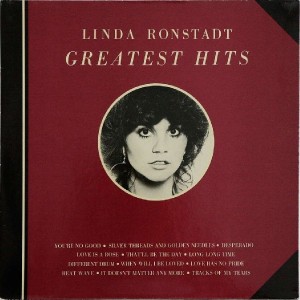
From inside the house, the sounds of Linda Ronstadt’s Greatest Hits leaked out through windows onto the lawn, where my six-year-old bare feet wandered. “That’ll Be the Day,” “Different Drum,” and “Desperado” played out adult dilemmas that I didn’t understand, but could sing to.
“That’ll be the day, when you say goodbye, that’ll be the day, when you make me cry. You say you’re going to leave me, you know that’s a lie, cause that’ll be the day when I die.”
Big words for a small mouth, but even though I was singing, I wasn’t registering the lyrics. It was Linda’s strong voice and the melodies that I heard and loved.
That album was part of my life soundtrack in the days before my parents separated. In less than two years, my father would move to his own place, leaving his turntable and a portion of his record collection behind. But until then, Linda’s greatest hits of love and loss were about a longing I had yet to know.
Before my family splintered, I do remember a certain, crystalline afternoon, standing by the roses in our side yard. Rather leggy, their thorny stems reaching toward light, they still held big, fragrant blooms. Even though I knew those thorns were to be avoided, I had yet to master picking a bud without getting stuck.
Those delicate pink folds held the sweetest smell. If only I could bend the stem my way without pricking my small fingers. As I gingerly reached to nose up close to the beauty, the song came to mind.
“Love is a rose and you better not pick it, only grows when it’s on the vine. Handful of thorns and you know you’ve missed it, lose your love when you say the word mine.”
In that culminating moment at six years old, there was a rose and a song. Everything clicked. Music reflected life. My first experience of metaphor, the words were about something I was holding in my hand…but more.
I may not have understood the full implication of the lyrics, but I did realize that Linda knew the sting of a thorn. No longer a little ditty to hum on the swing set, this song actually conveyed a cautionary creed. I got it, sort of.
So I resolved to no more picking. Only careful inhalations.


 For the Archives